

VIASURE Real Time PCR Detection Kits
Herpes Virus 1, Herpes Virus 2 & Varicella Zoster Virus 

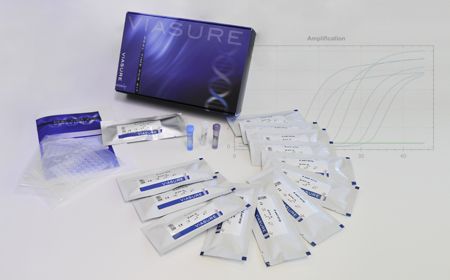
Description
VIASURE Herpes virus 1, Herpes virus 2 & Varicella Zoster Virus Real Time PCR Detection Kit is a non-automatized qPCR test designed for the simultaneous qualitative detection of DNA from Herpes simplex virus type 1 (HSV-1), Herpes simplex virus type 2 (HSV-2) and/or Varicella Zoster virus (VZV) in cerebrospinal fluid, lesion swab, ocular samples, and in EDTA-plasma and EDTA-whole blood samples collected in EDTA K2 tubes.
This test is intended to be used as an aid in the diagnosis of HSV-1, HSV-2 and/or Varicella Zoster in combination with clinical and epidemiological risk factors.
After DNA isolation, the identification of target sequences is performed by the amplification of a conserved region of the US4 gene (HSV-1), US6 gene (HSV-2) and ORF29 gene (VZV), using specific primers and fluorescent–labelled probes.
Specifications
Information
Herpes simplex virus types 1 and 2 (HSV-1 and -2) and varicella-zoster virus (VZV) are alphaherpesviruses that infect, establish latency in, and subsequently reactivate from human sensory nerve ganglia. Following reactivation from latent ganglia reservoirs, each of these herpesviruses may cause significant clinical disease in the individual and may spread to uninfected persons. Symptomatic VZV reactivation is an infrequent, usually once-in-a-lifetime event that results in zoster (shingles), while HSV-1 and -2 reactivation occurs frequently and results in numerous symptomatic and asymptomatic recurrences of oral and genital herpes.
Oral infections were most often caused by HSV-1 and genital infections by HSV-2. Herpes simplex virus (HSV)-1 and -2 are large, double-stranded DNA viruses that cause lifelong persistent infections characterized by periods of quiescence and recurrent disease. These two HSV types cannot be distinguished clinically. In fact, they share a high degree of genetic homology, but they also have specific regions with small nucleotide variations which may allow discrimination. HSV-1 and HSV-2 infection occurs via inoculation of virus particles into susceptible mucosal surfaces. Afterwards, these neurotropic viruses can become latent in the local sensory ganglion, periodically reactivating to cause symptomatic lesions, or undergo asymptomatic viral release, with the potential for disease transmission and infection. The same treatment is used for both HSV-1 and HSV-2 infections, the location of the lesions and the chronicity of the infection (primary or recurrent) determine dosage and frequency.
Varicella-zoster virus (VZV) is a member of the Herpesviridae family and causes chickenpox (varicella) and herpes zoster (shingles). Chickenpox is highly contagious and causes acute infection. This disease is characterized by a dermal vesiculopustular rash that develops 10–21 days following exposure. Primary infection with VZV results in immunity from subsequent infection; VZV remains latent within sensory neurons and may subsequently reactivate, causing disease (herpes zoster). Herpes zoster is a painful condition that occurs in older non-immune adults or those with waning immunity to VZV and in patients with impaired cellular immunity.
To shorten detection time and improve sensitivity, real-time PCR assays have proven to be a tool for the detection of Herpes simplex virus types 1 and 2 and Varicella-zoster virus.